

Hemarthrosis Embolization GAE Treatment
- No hospital
- No surgery
- No sutures
- No scars
- Outpatient
- Image guided
- Fast recovery
- Targetted therapy
- Low risk
- Successful
- Proven benefit
- Quick
Setup an appointment
What is hemarthrosis?
Hemarthrosis is a medical condition in which there is bleeding into a joint cavity (heme = blood and arthrosis = joint). Hemarthrosis most commonly occurs in the knees, ankles, and elbows. However, it can also occur in other joints such as the wrists, shoulders, and hips.
People with hemarthrosis can experience various symptoms, including pain, tenderness, redness, swelling, warmth, and stiffness of the affected joint. The area surrounding the joint may appear bruised. There may be a decreased range of motion (inability to fully move the joint in all directions).
Why does hemarthrosis occur?
There are various causes of hemarthrosis. These can be broadly categorized into post-operative, traumatic and non-traumatic causes.
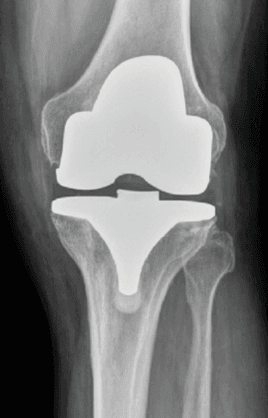
Hemarthrosis can be a postoperative complication of arthroscopic surgery, for example, following total knee replacement. Roughly 0.3% of patients who undergo total knee replacement develop recurrent hemarthrosis. The bleeding occurs, on average, around 2 years after the operation. This occurs due to very vascular synovial tissue within the joint that bleeds due to repetitive trauma. Typically, patients require 3-4 joint aspirations (drainage of the blood from the joint). However, some patients do not respond to conservative treatments or have severe bleeding. Such patients require a more definitive treatment such as hemarthrosis embolization.
Other causes of hemarthrosis include hemophilia (a bleeding disorder), osteoarthrosis, medications such as blood thinners, and tumors in the joint.
Why should hemarthrosis be treated?
If a person develops bleeding in the joint after knee replacement surgery and does not get treatment for it, the hemarthrosis can damage the joint. Over time, untreated hemarthrosis can lead to a loss of range of motion in the joint. There may also be a loss of strength in the surrounding muscles. Untreated hemarthrosis can cause pain with joint movement and at rest. With time, it may become difficult to perform daily activities like walking or going up and down stairs. Rarely, without proper treatment, hemarthrosis can cause sepsis (infection) deep inside the joint.
Treatment options for hemarthrosis
Conservative treatment should be tried first with resting and icing the joint, elevating the limb, and taking pain medication for symptom relief. In some patients, this may be all that is needed.
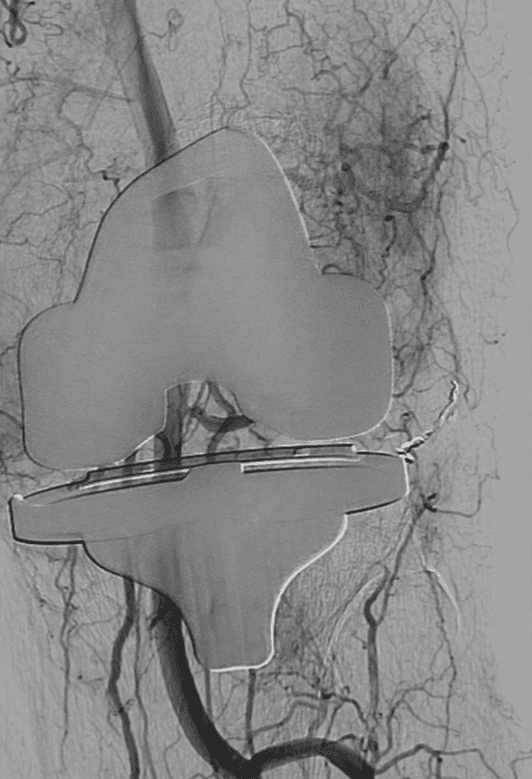
Recurrent hemarthrosis can also be treated by aspiration, surgical removal of the synovial tissue or embolization. Hemarthrosis embolization can be considered as a minimally invasive solution for patients with recurrent hemarthrosis who have failed to respond to conservative treatment and/or repeated joint aspirations. Angiography allows for visualization of the abnormal vessels (geniculate arteries) in the joint and treatment can be performed at the same time. Open surgical removal of the joint tissue (synovium) is also reported to be successful but in the setting of repeat surgery has higher rate of complication and morbidity, such as loss of function and infection.
Our image-guided specialist sees patients throughout the Los Angeles, Orange County and San Diego areas. Contact us today.
What is hemarthrosis embolization?
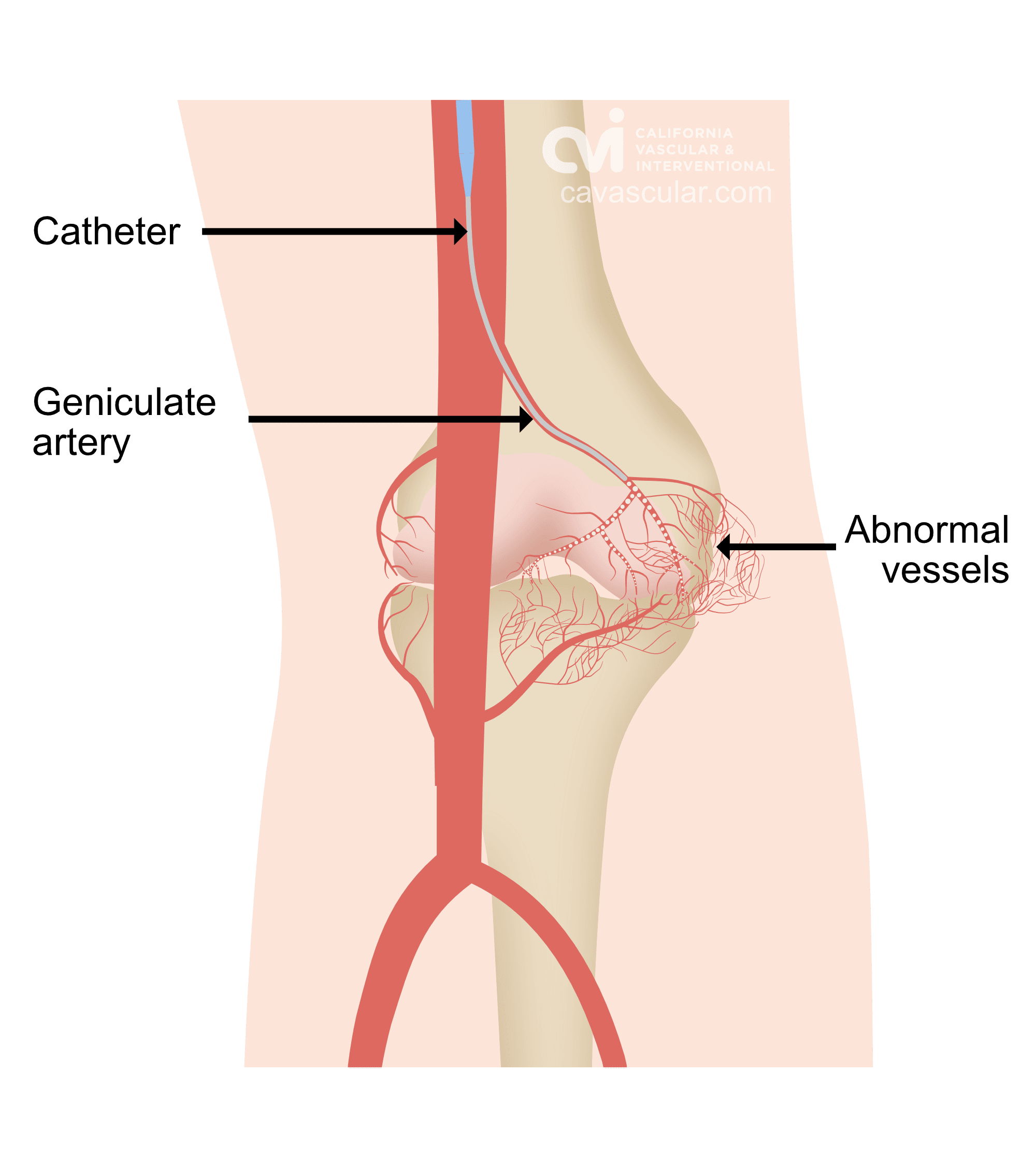
Embolization is a procedure in which the blood supply to a specific area is blocked. Hemarthrosishemarthrosis geniculate artery embolization treatment specialist embolization addresses the root cause of the problem, i.e., it blocks the abnormal arteries causing the bleeding into the knee joint.
Oftentimes, the culprits are the geniculate arteries that extend out into the knee joint and cause intermittent bleeding. Embolization of the geniculate arteries is a safe and effective treatment for recurrent spontaneous hemarthrosis after total knee replacement.
When someone has recurrent hemarthrosis after total knee replacement (bleeding continues to occur despite three or more joint aspirations), embolization offers a definitive solution. The exact source of bleeding is confirmed with angiography (imaging) and the bleeding artery is blocked with embolization. Compared with open surgery, embolization can be performed under local anesthesia, lowers the risk of infection, and expedites postoperative recovery.
You should seek the expert advice of your orthopedic surgeon and an interventional radiologist to further understand your options and expected outcomes.
Our outpatient center sees patients throughout Southern California including Los Angeles, Orange County and San Diego. The fibroid treatment is performed by our Endovascular Physician (an Interventional Radiologist) who is board certified in image-guided procedures using X-rays, tiny catheters and other micro-tools, and has performed thousands of complex embolizations.
What is Interventional Radiology? This is the only specialty in medicine specifically trained to perform embolization procedures, such as for hemarthrosis. Read more here.
What to expect
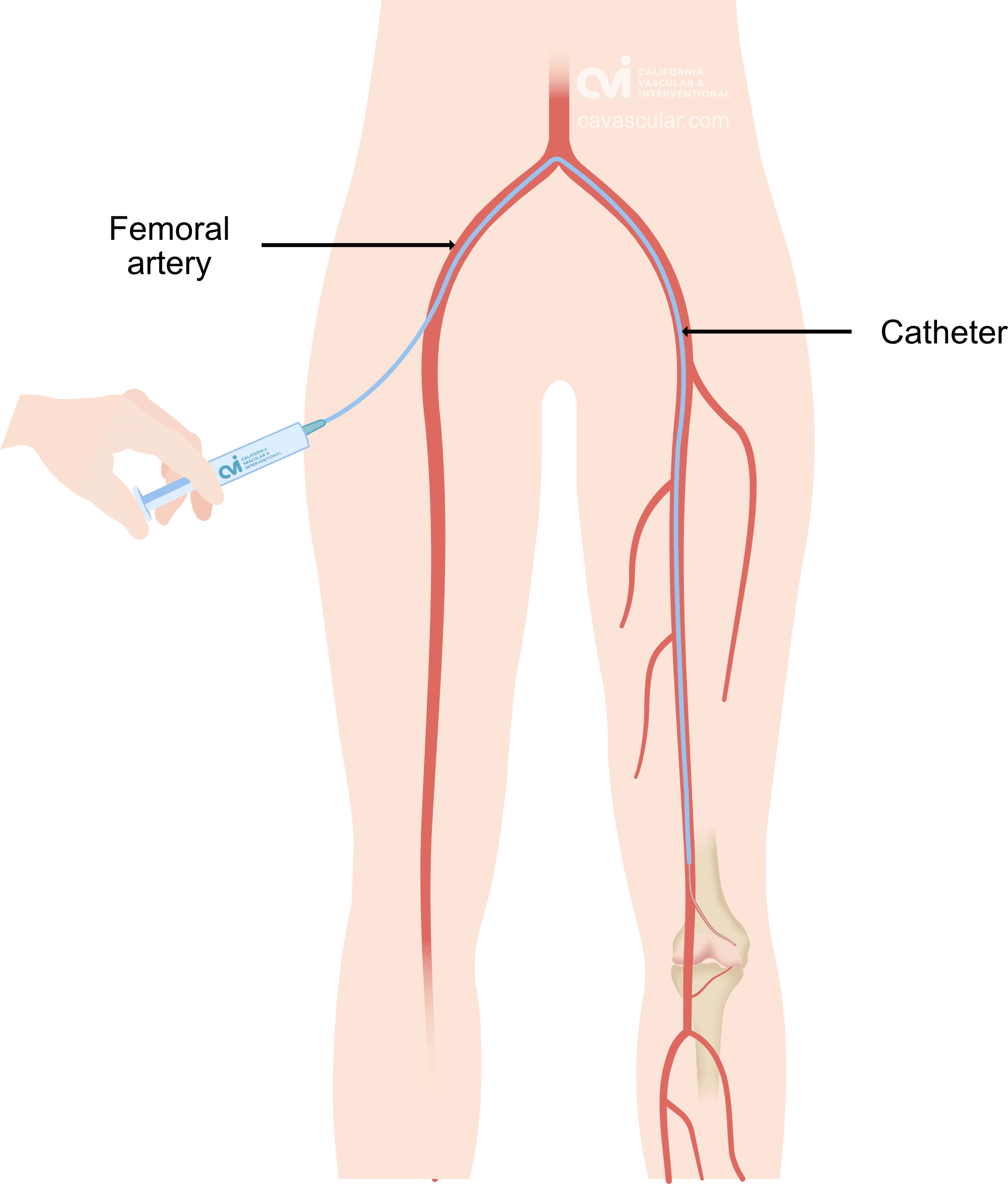
Geniculate artery embolization is an outpatient non-surgical procedure with minimal downtime. The procedure is done in an outpatient state-of-the-art center where our interventional radiologist performs the treatment through a tiny tube called a catheter. This procedure can be performed by placing the catheter in an artery at the top of the leg (called a femoral approach).
The patient is given a local and topical anesthetic to numb the skin and a mild sedative so that the procedure is not painful. A sophisticated X-ray machine that creates moving pictures in “real” time enables the doctor to see the catheter as it is guided through the blood vessels and into the geniculate artery.
The final step in geniculate artery embolization is the injection of tiny particles the size of sand particles through the catheter. The particles lodge in the blood vessels bleeding into the joint and cutting off their blood supply.
Results of hemarthrosis embolization
Studies have shown that 50% of patients require a single embolization procedure for recurrent hemarthrosis following total knee arthroplasty. If needed, the procedure can be safely repeated without adverse effects. The technical success rate of hemarthrosis embolization is 100%. At follow-up after 26.8 months, the clinical success rate is 86%, meaning 8-9 out of 10 patients are symptom-free.
Hemarthrosis embolization is considered a minimally invasive treatment that is safe and effective for spontaneous recurrent hemarthrosis after total knee replacement.
What do you need to do next? Request an appointment to meet with our embolization doctor who will review your imaging, labs and history to determine if you are candidate for the procedure, and the outcomes you can expect.
Appointments are available via an online video telehealth platform or in person at one of the offices in Los Angeles, Orange County or San Diego, depending on the doctor’s availability. Contact Us Today. Why should you choose us? Read here.
References:
- Lombardi M, Cardenas AC. Hemarthrosis. [Updated 2020 Aug 8]. In: StatPearls [Internet]. Treasure Island (FL): StatPearls Publishing; 2020 Jan-. Available from: https://www.ncbi.nlm.nih.gov/books/NBK525999/
- Medical News Today. All you need to know about hemarthrosis by Tom Seymour. Date: December 27, 2017. https://www.medicalnewstoday.com/articles/320443#
- Healthline. Hemarthrosis by Jacquelyn Cafasso, medically reviewed by Graham Rogers, M.D. Updated on June 14, 2017. https://www.healthline.com/health/hemarthrosis
- The Hemophilia, von Willebrand Disease & Platelet Disorders Handbook. Joint Bleeds. https://www.hog.org/handbook/article/3/33/joint-bleeds
- Yoo JH, Oh HC, Park SH, Lee S, Lee Y, Kim SH. Treatment of Recurrent Hemarthrosis after Total Knee Arthroplasty. Knee Surg Relat Res. 2018;30(2):147-152. doi:10.5792/ksrr.17.059. https://www.ncbi.nlm.nih.gov/pmc/articles/PMC5990227
- National Cancer Institute. Arterial embolization. https://www.cancer.gov/publications/dictionaries/cancer-terms/def/arterial-embolization
- Maheshwari R, Kelley SP, Langkamer VG, Loveday E. Spontaneous recurrent haemarthrosis following unicompartmental knee arthroplasty and its successful treatment by coil embolisation. Knee. 2004;11:413-5.
- van Baardewijk LJ, Hoogeveen YL, van der Geest ICM, Schultze Kool LJ. Embolization of the Geniculate Arteries Is an Effective Treatment of Recurrent Hemarthrosis Following Total Knee Arthroplasty That Can Be Safely Repeated. J Arthroplasty. 2018 Apr;33(4):1177-1180.e1. doi: 10.1016/j.arth.2017.11.002. Epub 2017 Nov 24. PMID: 29224993. https://pubmed.ncbi.nlm.nih.gov/29224993
The above information explains what is involved and the possible risks. It is not meant to be a substitute for informed discussion between you and your doctor, but can act as a starting point for such a discussion.


Setup an appointment
Knee filling with blood after replacement? You don't need another surgery.
Recurrent hemarthrosis — a knee that keeps bleeding and swelling after total knee replacement — can be fixed at its source. Geniculate artery embolization blocks only the abnormal bleeding vessels, through a pinhole: outpatient, local anesthesia, a 100% technical success rate, and 86% of patients symptom-free at follow-up.8
Hemarthrosis embolization at a glance
Technical success rate8
Anesthesia only — no general, lower infection risk
Everything repeat surgery isn't
- No hospital
- Outpatient
- Low risk
- No surgery
- Image guided
- Successful
- No sutures
- Fast recovery
- Proven benefit
- No scars
- Targeted therapy
- Quick
Hemarthrosis is bleeding into a joint cavity — most often the knee, including recurrent bleeding after total knee replacement caused by very vascular synovial tissue. When bleeding continues despite three or more joint aspirations, geniculate artery embolization offers a definitive fix: through a tiny catheter, angiography pinpoints the exact bleeding vessels and sand-sized particles block them at the source — in the same session. Outpatient, local anesthesia (lower infection risk than repeat surgery), home the same day. 100% technical success, 86% of patients symptom-free at 26.8-month follow-up,8 and the procedure can be safely repeated if ever needed.
8–9 out of 10 patients8
What is hemarthrosis?
Hemarthrosis is bleeding into a joint cavity — heme = blood, arthrosis = joint — most commonly in the knee.
Hemarthrosis is a medical condition in which there is bleeding into a joint cavity (heme = blood and arthrosis = joint). Hemarthrosis most commonly occurs in the knees, ankles, and elbows. However, it can also occur in other joints such as the wrists, shoulders, and hips.1
People with hemarthrosis can experience various symptoms, including pain, tenderness, redness, swelling, warmth, and stiffness of the affected joint. The area surrounding the joint may appear bruised. There may be a decreased range of motion (inability to fully move the joint in all directions).2,3
Find out in under a minute – no phone call needed.
Why does hemarthrosis occur?
After total knee replacement, roughly 0.3% of patients develop recurrent hemarthrosis — very vascular synovial tissue that bleeds with repetitive trauma, on average about 2 years after the operation.5
There are various causes of hemarthrosis. These can be broadly categorized into post-operative, traumatic and non-traumatic causes.
Hemarthrosis can be a postoperative complication of arthroscopic surgery, for example, following total knee replacement. Roughly 0.3% of patients who undergo total knee replacement develop recurrent hemarthrosis. The bleeding occurs, on average, around 2 years after the operation. This occurs due to very vascular synovial tissue within the joint that bleeds due to repetitive trauma.5 Typically, patients require 3-4 joint aspirations (drainage of the blood from the joint). However, some patients do not respond to conservative treatments or have severe bleeding. Such patients require a more definitive treatment such as hemarthrosis embolization.
Other causes of hemarthrosis include hemophilia (a bleeding disorder), osteoarthrosis, medications such as blood thinners, and tumors in the joint.4
Why should hemarthrosis be treated?
Untreated, hemarthrosis can damage the joint — costing you range of motion, strength, and the ability to walk or take stairs comfortably.
What are the treatment options for hemarthrosis?
Conservative care and aspirations come first. When bleeding keeps returning, embolization fixes the source — without the risks of repeat open surgery.
Conservative treatment should be tried first with resting and icing the joint, elevating the limb, and taking pain medication for symptom relief. In some patients, this may be all that is needed.
Recurrent hemarthrosis can also be treated by aspiration, surgical removal of the synovial tissue or embolization. Hemarthrosis embolization can be considered as a minimally invasive solution for patients with recurrent hemarthrosis who have failed to respond to conservative treatment and/or repeated joint aspirations. Angiography allows for visualization of the abnormal vessels (geniculate arteries) in the joint and treatment can be performed at the same time.7,8 Open surgical removal of the joint tissue (synovium) is also reported to be successful but in the setting of repeat surgery has a higher rate of complication and morbidity, such as loss of function and infection.
Our image-guided specialist sees patients throughout the Los Angeles, Orange County and San Diego areas. Contact us today.
Geniculate Artery Embolization
- Blocks the abnormal bleeding arteries — the root cause
- Angiography finds the exact source; treated in the same session
- Local anesthesia — no general
- Lowers the risk of infection; expedites recovery
- Outpatient — no hospital, no sutures, no scars
- Can be safely repeated if ever needed8
Open Synovectomy (Repeat Surgery)
- Open surgical removal of the joint tissue (synovium)
- In the setting of repeat surgery: higher rate of complication and morbidity
- Risks include loss of function and infection
- General anesthesia
- Hospital-based, longer recovery
- Repeated aspirations only drain the blood — they don't stop the bleeding
What is hemarthrosis embolization?
Embolization blocks the abnormal arteries causing the bleeding — the geniculate arteries — treating the root cause, not just the symptom.6
Embolization is a procedure in which the blood supply to a specific area is blocked.6 Hemarthrosis embolization addresses the root cause of the problem, i.e., it blocks the abnormal arteries causing the bleeding into the knee joint.
Oftentimes, the culprits are the geniculate arteries that extend out into the knee joint and cause intermittent bleeding. Embolization of the geniculate arteries is a safe and effective treatment for recurrent spontaneous hemarthrosis after total knee replacement.7,8
When someone has recurrent hemarthrosis after total knee replacement (bleeding continues to occur despite three or more joint aspirations), embolization offers a definitive solution. The exact source of bleeding is confirmed with angiography (imaging) and the bleeding artery is blocked with embolization. Compared with open surgery, embolization can be performed under local anesthesia, lowers the risk of infection, and expedites postoperative recovery.8
Two experts, one decision. You should seek the expert advice of your orthopedic surgeon and an interventional radiologist to further understand your options and expected outcomes.
Our outpatient center sees patients throughout Southern California including Los Angeles, Orange County and San Diego. The hemarthrosis treatment is performed by our Endovascular Physician (an Interventional Radiologist) who is board certified in image-guided procedures using X-rays, tiny catheters and other micro-tools, and has performed thousands of complex embolizations.
What is Interventional Radiology? This is the only specialty in medicine specifically trained to perform embolization procedures, such as for hemarthrosis. Read more here.
What should you expect during the procedure?
A tiny catheter from the top of the leg, real-time X-ray to the geniculate artery, sand-sized particles — and home the same day.
Geniculate artery embolization is an outpatient non-surgical procedure with minimal downtime. The procedure is done in an outpatient state-of-the-art center where our interventional radiologist performs the treatment through a tiny tube called a catheter. This procedure can be performed by placing the catheter in an artery at the top of the leg (called a femoral approach).
Numbing & mild sedation
A local and topical anesthetic numbs the skin and a mild sedative is given, so the procedure is not painful — no general anesthesia.
Tiny catheter — femoral approach
A tiny tube called a catheter is placed in an artery at the top of the leg and guided toward the knee.
Angiography pinpoints the bleeding
A real-time X-ray machine guides the catheter into the geniculate artery, and angiography confirms the exact source of bleeding.
Block the vessels — home the same day
Sand-sized particles lodge in the abnormal blood vessels bleeding into the joint and cut off their blood supply. No hospital, no sutures, no scars.
The patient is given a local and topical anesthetic to numb the skin and a mild sedative so that the procedure is not painful. A sophisticated X-ray machine that creates moving pictures in “real” time enables the doctor to see the catheter as it is guided through the blood vessels and into the geniculate artery.
The final step in geniculate artery embolization is the injection of tiny particles the size of sand particles through the catheter. The particles lodge in the blood vessels bleeding into the joint and cut off their blood supply.
What are the results of hemarthrosis embolization?
100% technical success — and at 26.8-month follow-up, 86% of patients are symptom-free: 8–9 out of 10.8
Studies have shown that 50% of patients require a single embolization procedure for recurrent hemarthrosis following total knee arthroplasty. If needed, the procedure can be safely repeated without adverse effects.8 The technical success rate of hemarthrosis embolization is 100%. At follow-up after 26.8 months, the clinical success rate is 86%, meaning 8-9 out of 10 patients are symptom-free.5,8
Hemarthrosis embolization is considered a minimally invasive treatment that is safe and effective for spontaneous recurrent hemarthrosis after total knee replacement.7,8
What do you need to do next? Request an appointment to meet with our embolization doctor who will review your imaging, labs and history to determine if you are a candidate for the procedure, and the outcomes you can expect.
Appointments are available via an online video telehealth platform or in person at one of the offices in Los Angeles, Orange County or San Diego, depending on the doctor’s availability. Contact Us Today. Why should you choose us? Read here.
Targeted therapy demands a targeted specialist
Blocking only the abnormal bleeding vessels — millimeters from a knee prosthesis — is precision work. The geniculate arteries are the same vessels our specialist treats routinely for knee osteoarthritis.
It matters who holds the wire
A definitive fix — not another drain
Aspirations remove the blood; embolization stops the bleeding. After 3+ aspirations, treating the root cause is the definitive solution.
Exceptional catheter-and-wire skill
Geniculate arteries, every week
These are the same arteries treated routinely here for knee osteoarthritis (GAE) — among thousands of complex embolizations performed.
Works with your orthopedic surgeon
We encourage the expert advice of both your orthopedic surgeon and an interventional radiologist — so you understand every option and outcome.
Request an Appointment
Please note that although we strive to protect and secure our online communications, and use the security measures detailed in our Privacy Policy to protect your information, no data transmitted over the Internet can be guaranteed to be completely secure and no security measures are perfect or impenetrable. If you would like to transmit sensitive information to us, please contact us, without including the sensitive information, to arrange a more secure means of communication. By submitting this form you consent to receive text messages from CVI at the number provided. Msg & data rates may apply. Msg frequency varies. Unsubscribe at any time by replying STOP.
Who performs your hemarthrosis embolization?
At California Vascular & Interventional, your embolization is performed by our Endovascular Physician — a board-certified Interventional Radiologist, the only specialty in medicine specifically trained to perform embolization procedures.
It matters who holds the wire. Stopping a bleeding knee means guiding microwires and catheters into the small geniculate arteries and blocking only the abnormal vessels — precision work millimeters from a prosthesis. That level of catheter-and-wire skill is part rigorous training and part innate talent — a steadiness of hand and an ability to visualize the end result that can’t simply be taught.
Atabak Allaei, MD
Board certified in image-guided procedures using X-rays, tiny catheters and other micro-tools, Dr. Allaei has performed thousands of complex embolizations — including routine geniculate artery embolization for knee osteoarthritis, the same arteries treated in hemarthrosis. Consultations and second opinions by telehealth or in person in Los Angeles, Orange County, and San Diego.
References:
- Lombardi M, Cardenas AC. Hemarthrosis. [Updated 2020 Aug 8]. In: StatPearls [Internet]. Treasure Island (FL): StatPearls Publishing; 2020 Jan-. Available from: https://www.ncbi.nlm.nih.gov/books/NBK525999/
- Medical News Today. All you need to know about hemarthrosis by Tom Seymour. Date: December 27, 2017. https://www.medicalnewstoday.com/articles/320443#
- Healthline. Hemarthrosis by Jacquelyn Cafasso, medically reviewed by Graham Rogers, M.D. Updated on June 14, 2017. https://www.healthline.com/health/hemarthrosis
- The Hemophilia, von Willebrand Disease & Platelet Disorders Handbook. Joint Bleeds. https://www.hog.org/handbook/article/3/33/joint-bleeds
- Yoo JH, Oh HC, Park SH, Lee S, Lee Y, Kim SH. Treatment of Recurrent Hemarthrosis after Total Knee Arthroplasty. Knee Surg Relat Res. 2018;30(2):147-152. doi:10.5792/ksrr.17.059. https://www.ncbi.nlm.nih.gov/pmc/articles/PMC5990227
- National Cancer Institute. Arterial embolization. https://www.cancer.gov/publications/dictionaries/cancer-terms/def/arterial-embolization
- Maheshwari R, Kelley SP, Langkamer VG, Loveday E. Spontaneous recurrent haemarthrosis following unicompartmental knee arthroplasty and its successful treatment by coil embolisation. Knee. 2004;11:413-5.
- van Baardewijk LJ, Hoogeveen YL, van der Geest ICM, Schultze Kool LJ. Embolization of the Geniculate Arteries Is an Effective Treatment of Recurrent Hemarthrosis Following Total Knee Arthroplasty That Can Be Safely Repeated. J Arthroplasty. 2018 Apr;33(4):1177-1180.e1. doi: 10.1016/j.arth.2017.11.002. Epub 2017 Nov 24. PMID: 29224993. https://pubmed.ncbi.nlm.nih.gov/29224993
Hemarthrosis embolization: common questions
What is hemarthrosis?
Hemarthrosis is a medical condition in which there is bleeding into a joint cavity (heme = blood and arthrosis = joint). It most commonly occurs in the knees, ankles, and elbows, but can also occur in other joints such as the wrists, shoulders, and hips. Symptoms can include pain, tenderness, redness, swelling, warmth, and stiffness of the affected joint; the area may appear bruised, and there may be a decreased range of motion.
Why does hemarthrosis occur after knee replacement?
Hemarthrosis can be a postoperative complication of arthroscopic surgery — for example, following total knee replacement. Roughly 0.3% of patients who undergo total knee replacement develop recurrent hemarthrosis, with bleeding occurring on average around 2 years after the operation. It happens because very vascular synovial tissue within the joint bleeds due to repetitive trauma. Other causes of hemarthrosis include hemophilia (a bleeding disorder), osteoarthrosis, medications such as blood thinners, and tumors in the joint.
What happens if hemarthrosis is left untreated?
Untreated hemarthrosis can damage the joint. Over time it can lead to a loss of range of motion, loss of strength in the surrounding muscles, and pain with joint movement and at rest. It may become difficult to perform daily activities like walking or going up and down stairs. Rarely, without proper treatment, hemarthrosis can cause sepsis (infection) deep inside the joint.
What are the treatment options for recurrent hemarthrosis?
Conservative treatment should be tried first — resting and icing the joint, elevating the limb, and pain medication. Recurrent hemarthrosis can also be treated by joint aspiration (drainage), surgical removal of the synovial tissue, or embolization. Embolization is a minimally invasive solution for patients who have failed conservative treatment and/or repeated joint aspirations — typically patients require 3–4 aspirations before a definitive treatment is considered. Open surgical removal of the joint tissue is also reported to be successful, but in the setting of repeat surgery it has a higher rate of complication and morbidity, such as loss of function and infection.
What is hemarthrosis (geniculate artery) embolization?
Embolization is a procedure in which the blood supply to a specific area is blocked. Hemarthrosis embolization addresses the root cause of the problem: it blocks the abnormal arteries causing the bleeding into the knee joint — most often the geniculate arteries. When bleeding continues despite three or more joint aspirations after total knee replacement, embolization offers a definitive solution: the exact source is confirmed with angiography and the bleeding artery is blocked in the same session. Compared with open surgery, embolization can be performed under local anesthesia, lowers the risk of infection, and expedites recovery.
What should I expect during the procedure?
Geniculate artery embolization is an outpatient, non-surgical procedure with minimal downtime, performed through a tiny catheter placed in an artery at the top of the leg (femoral approach). A local and topical anesthetic numbs the skin and a mild sedative keeps the procedure from being painful. A real-time X-ray machine guides the catheter into the geniculate artery, and tiny sand-sized particles are injected to block the abnormal vessels bleeding into the joint. You go home the same day — no hospital, no sutures, no scars.
How effective is hemarthrosis embolization?
The technical success rate is 100%. At follow-up after 26.8 months, the clinical success rate is 86% — meaning 8 to 9 out of 10 patients are symptom-free. Studies have shown that 50% of patients require a single embolization procedure for recurrent hemarthrosis following total knee arthroplasty, and if needed, the procedure can be safely repeated without adverse effects. It is considered a safe and effective, minimally invasive treatment for spontaneous recurrent hemarthrosis after total knee replacement.
Why choose California Vascular & Interventional for hemarthrosis embolization?
The treatment is performed by our Endovascular Physician — a board-certified Interventional Radiologist, the only specialty in medicine specifically trained to perform embolization procedures — who has performed thousands of complex embolizations, including routine work in the same geniculate arteries treated for knee osteoarthritis (GAE). Blocking only the abnormal bleeding vessels near a knee prosthesis is targeted therapy that demands superior catheter-and-wire skill. We encourage patients to seek the advice of both their orthopedic surgeon and an interventional radiologist, and we offer consultations by telehealth or in person in Los Angeles, Orange County, and San Diego.
Explore related treatments
Knee Osteoarthritis (GAE)
Frozen Shoulder (ACE)
Achilles Tendinopathy (TAME)
Tennis Elbow (TAME)
Plantar Fasciitis
Meet Our Specialist
Stop the cycle of aspirations
If your knee keeps filling with blood after replacement surgery — and drainage keeps buying only weeks of relief — the bleeding source can be found and blocked in a single outpatient session. Request an appointment to meet with our embolization doctor, who will review your imaging, labs and history, by telehealth or in person in Los Angeles, Orange County or San Diego.