
Why Treat an Enlarged Prostate?
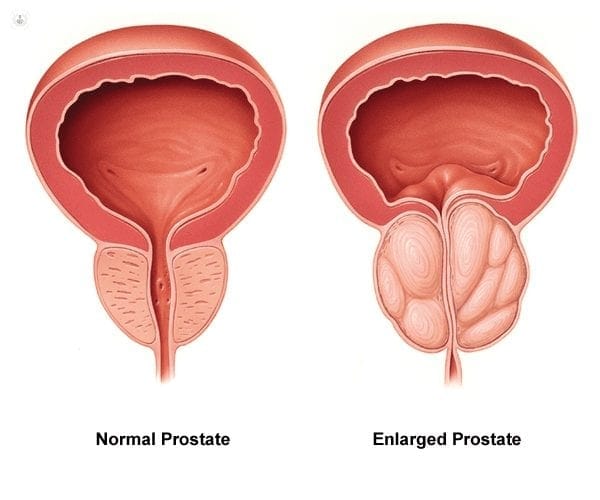
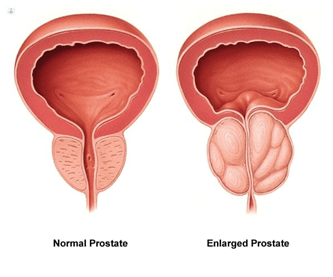
Benign prostatic hyperplasia (BPH) is the medical term to describe an enlarged prostate. An enlarged prostate is very common in men over the age of 50. Not all men with enlarged prostate experience symptoms. But as the prostate grows, it can press on the urethra, causing problems with the flow of urine as you try to urinate.
What is Prostate Artery Embolization (PAE)?
Prostate artery embolization, or PAE, is an outpatient non-surgical procedure that treats enlarged prostates by blocking its blood flow. By doing so, it shrinks the prostate.
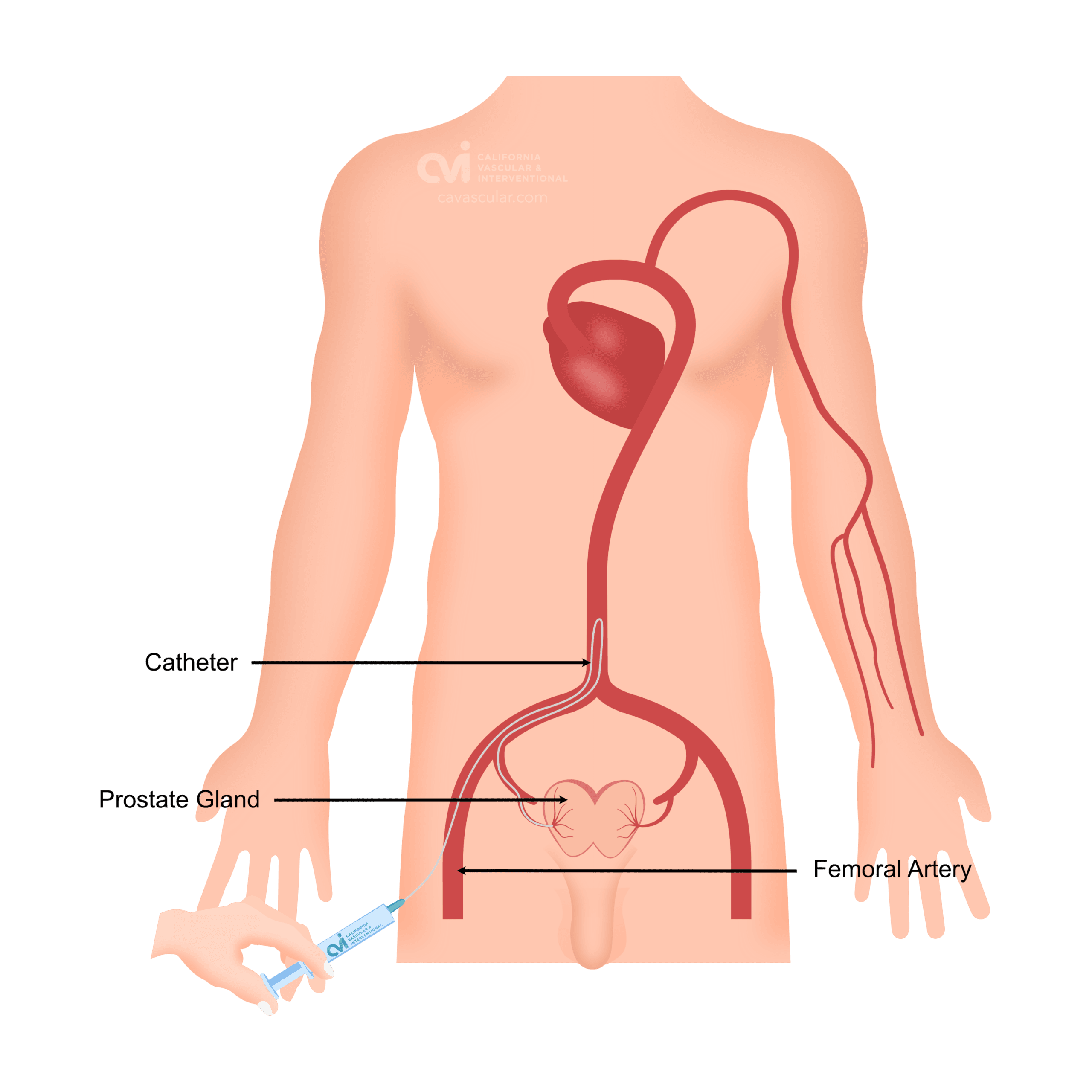
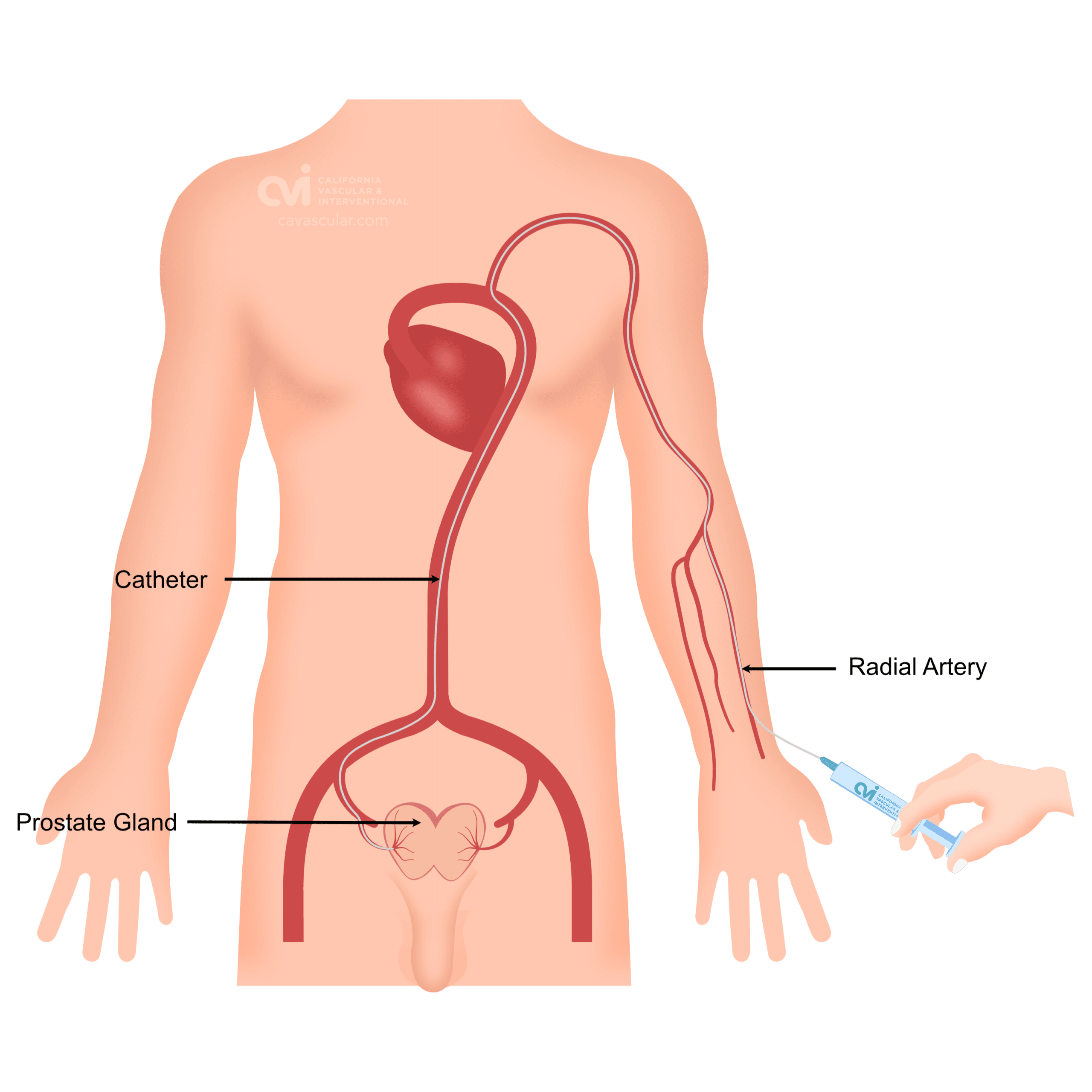
This procedure is performed by an interventional radiologist who is a physician that is sub-specialized in image-guided procedures using X-rays, tiny catheters and other micro-tools. This can be performed either through the femoral artery or radial artery as illustrated below.
Am I a candidate for Prostate Artery Embolization (PAE)?
If you experience the following symptoms you maybe a candidate for PAE:
- Problems passing urine, including difficulty starting the urine flow
- A weak stream and dribbling after going to the toilet
- Passing urine more frequently
- Getting up at night to pass urine
- An urgent need to pass urine
- Incontinence and leakage of urine
- The feeling that the bladder is not emptying properly
You will meet with our doctor who will review your imaging, labs and history to determine if you are candidate for PAE and the outcomes you can expect. Our doctor will also be in communication with your urologist to determine if any additional testing is required or if an alternative treatment should be recommended.
What to expect
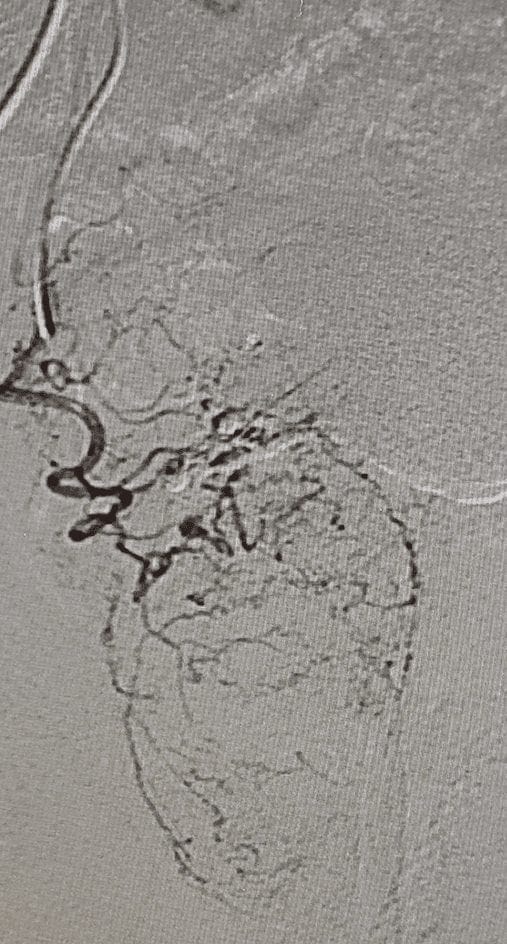
Our highly trained interventional radiologist, who is experienced in advanced embolization techniques, performs this procedure in an outpatient state-of-the-art center, or in some cases the hospital.
Prior to the procedure, the patient is given a local and topical anesthetic to numb the skin and a mild sedative so that the procedure is essentially pain-free. A tiny tube called a catheter is inserted then into an artery at the top of the leg or wrist. A sophisticated X-ray machine that creates moving pictures in “real” time enables the doctor to see the catheter as it is guided through the blood vessels and into the prostate artery.
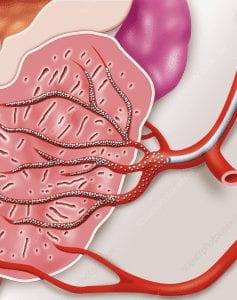
The final step in prostate embolization is the injection of tiny particles the size of sand particles through the catheter. The particles lodge in the blood vessels feeding the prostate and cut off the blood supply causing the prostate to shrink in size.
Advantage of PAE over Surgery
- Less risk of sexual side effects, such as retrograde ejaculation
- Lower risk of incontinence
- Less likely to require urinary catheterization
- Less downtime with fast recovery
- Minimally invasive without large incisions
- Safe and effective alternative to surgery
- More than 3 out of 4 men avoid TURP surgery
- Can serve as a bridge between medical therapy and surgery
Surgical options such as TURP and open prostatectomy have higher reported rates of retrograde ejaculation (ejaculation into the bladder rather than out through the urethra), impotence, and urinary incontinence.
Appointments are available via an online video telehealth platform or in person at one of the offices in Los Angeles, Orange County or San Diego, depending on the doctor’s availability. Contact Us Today. Why should you choose us? Read here.
Results
Over 70% of men will gain symptomatic improvement after PAE with reduction in prostate volumes and an increase in urinary flow rates, without sexual dysfunction.
20% of patients have reported to have experienced improvement without the occurrence of any change in prostate size. PAE is a safe procedure, designed to improve your medical condition and save you having a larger operation.
The above information explains what is involved and the possible risks. It is not meant to be a substitute for informed discussion between you and your doctor, but can act as a starting point for such a discussion.
Setup an appointment
Shrink an enlarged prostate — without surgery.
PAE treats BPH by blocking the blood supply feeding the prostate so it shrinks. Outpatient, no incision, and with lower rates of sexual side effects and incontinence than TURP.4 Now formally recognized in the American Urological Association’s 2023 BPH guideline.1,2
Prostate artery embolization at a glance
vs. TURP surgery4,5
AUA 2023 amendment1,2
Why treat an enlarged prostate?
As the prostate grows it can press on the urethra, disrupting the flow of urine — and it's very common in men over 50.6
Benign prostatic hyperplasia (BPH) is the medical term to describe an enlarged prostate. An enlarged prostate is very common in men over the age of 50. Not all men with enlarged prostate experience symptoms. But as the prostate grows, it can press on the urethra, causing problems with the flow of urine as you try to urinate.
Left untreated, worsening lower urinary tract symptoms can affect sleep, daily activity and quality of life — which is why BPH is one of the most commonly treated conditions in men’s health.6
Find out in under a minute – no phone call needed.
What is prostate artery embolization (PAE)?
An outpatient, non-surgical procedure that treats an enlarged prostate by blocking its blood flow — shrinking the prostate rather than cutting it.
Prostate artery embolization, or PAE, is an outpatient non-surgical procedure that treats enlarged prostates by blocking its blood flow. By doing so, it shrinks the prostate.
This procedure is performed by an interventional radiologist who is a physician that is sub-specialized in image-guided procedures using X-rays, tiny catheters and other micro-tools. This can be performed either through the femoral artery or radial artery as illustrated below.
Now in the AUA guideline. In its 2023 amendment, the American Urological Association added prostate artery embolization to its BPH guideline as a Conditional Recommendation, noting it should be performed by clinicians trained in this interventional radiology procedure following a discussion of the risks and benefits.1 This was a substantive change — the previous 2021 guideline had recommended against PAE outside of clinical trials.2 PAE is also supported by NICE guidance in the United Kingdom.7
Am I a candidate for prostate artery embolization?
If you're dealing with any of these urinary symptoms, you may be a candidate for PAE.
If you experience the following symptoms you may be a candidate for PAE:
- Problems passing urine, including difficulty starting the urine flow
- A weak stream and dribbling after going to the toilet
- Passing urine more frequently
- Getting up at night to pass urine
- An urgent need to pass urine
- Incontinence and leakage of urine
- The feeling that the bladder is not emptying properly
You will meet with our doctor who will review your imaging, labs and history to determine if you are a candidate for PAE and the outcomes you can expect. Our doctor will also be in communication with your urologist to determine if any additional testing is required or if an alternative treatment should be recommended.
Not a competition with your urologist. PAE sits in the care pathway between medication and surgery,3and the right answer depends on your prostate size, anatomy and symptoms. We'd rather tell you another option fits better than treat the wrong patient.
What to expect during the procedure
Local anesthetic and a mild sedative, a tiny catheter from the leg or wrist, real-time X-ray to the prostate artery, then sand-sized particles — essentially pain-free.
Numbing & mild sedation
A local and topical anesthetic numbs the skin and a mild sedative is given, so the procedure is essentially pain-free — no general anesthesia.
Tiny catheter — leg or wrist
Real-time X-ray guidance
Particles shrink the prostate
Advantages of PAE over surgery
The strongest case for PAE is what it avoids — retrograde ejaculation, incontinence, catheterization, and a long recovery.4,5
Prostate Artery Embolization
- Less risk of sexual side effects, such as retrograde ejaculation4,5
- Lower risk of incontinence
- Less likely to require urinary catheterization
- Less downtime with fast recovery
- Minimally invasive without large incisions
- Safe and effective alternative to surgery
- More than 3 out of 4 men avoid TURP surgery3
- Can serve as a bridge between medical therapy and surgery3
TURP & Open Prostatectomy
- Higher reported rates of retrograde ejaculation4
- Higher reported rates of impotence
- Higher reported rates of urinary incontinence
- Higher overall complication and adverse-event rates4
- Usually requires anesthesia and a hospital stay3
- Longer recovery and downtime
Surgical options such as TURP and open prostatectomy have higher reported rates of retrograde ejaculation (ejaculation into the bladder rather than out through the urethra), impotence, and urinary incontinence.4
An honest trade-off. TURP remains the surgical benchmark, and in head-to-head studies it generally produces a greater increase in peak urinary flow and a greater reduction in prostate volume than PAE. Where the two are comparable is in symptom scores and quality of life — while PAE has the lower complication and side-effect profile and a shorter recovery.4,5 Which matters more depends on you, and it's exactly what the consultation is for.
Appointments are available via an online video telehealth platform or in person at one of the offices in Los Angeles, Orange County or San Diego, depending on the doctor’s availability. Contact Us Today. Why should you choose us? Read here.
What are the results of PAE?
Over 70% of men gain symptomatic improvement after PAE — with reduced prostate volume and increased urinary flow, without sexual dysfunction.
Over 70% of men will gain symptomatic improvement after PAE with reduction in prostate volumes and an increase in urinary flow rates, without sexual dysfunction.
20% of patients have reported to have experienced improvement without the occurrence of any change in prostate size. PAE is a safe procedure, designed to improve your medical condition and save you having a larger operation.
The guidelines say who should do this — not just whether it works
Both the AUA guideline and the UK-ROPE study make the same point: PAE is an advanced embolization technique that should be performed by experienced, specifically trained interventional radiologists.1,3
If you’ve been diagnosed with a scrotal hydrocele, it’s important to gain at least a basic understanding of your treatment options. Every approach to treatment has its pros and cons. Ultimately, the treatment you choose will depend on what your doctor recommends and what feels best to you. Some patients obtain surgery while others prefer a non-surgical option such as sclerotherapy, and only seek surgery if the treatment is not effective for them. You should seek the expert advice of your urologist and our interventional radiologist to further understand your options and expected outcomes.
It matters who holds the wire
The prostatic arteries are small, highly variable from man to man, and sit among vessels that must not be embolized. Getting particles into the right branches means steering a hair-thin catheter through that maze while reading a flat, two-dimensional X-ray of a three-dimensional arterial tree, in real time. That spatial ability is an innate talent that comes easily to very few — experience sharpens it, but it can’t manufacture it. Our board-certified Endovascular Physician brings over 2,000 complex embolizations across more than 10,000 image-guided procedures — prostate, uterine, gonadal, joint and visceral arteries — which is exactly the depth the guidelines have in mind when they say this procedure belongs in trained hands.1,3
We work with your urologist
Our doctor communicates directly with your urologist about additional testing — or whether an alternative treatment is the better call for you.
3D vision from a 2D image
Embolization is our whole field
Leg or wrist access
Request an Appointment
Please note that although we strive to protect and secure our online communications, and use the security measures detailed in our Privacy Policy to protect your information, no data transmitted over the Internet can be guaranteed to be completely secure and no security measures are perfect or impenetrable. If you would like to transmit sensitive information to us, please contact us, without including the sensitive information, to arrange a more secure means of communication. By submitting this form you consent to receive text messages from CVI at the number provided. Msg & data rates may apply. Msg frequency varies. Unsubscribe at any time by replying STOP.
Who performs your PAE?
At California Vascular & Interventional, your prostate artery embolization is performed by Dr. Atabak Allaei — a board-certified Interventional Radiologist and Endovascular Physician, the only specialty in medicine specifically trained to perform embolization procedures.
It matters who holds the wire. The prostatic arteries vary from man to man and sit beside vessels that must not be embolized — so the work is read entirely from flat images of a three-dimensional arterial tree. That spatial skill comes easily to very few, and experience alone can’t manufacture it — it can only sharpen it in a physician who already has it.
Atabak Allaei, MD
Board certified in image-guided procedures using X-rays, tiny catheters and other micro-tools, Dr. Allaei has performed over 2,000 complex embolizations across more than 10,000 image-guided procedures — spanning the prostate, uterine, gonadal, joint and visceral arteries. He works in communication with your urologist to determine whether PAE or an alternative treatment is the better option. Consultations by telehealth or in person in Los Angeles, Orange County, and San Diego.
Prostate artery embolization: common questions
What is an enlarged prostate (BPH)?
Benign prostatic hyperplasia (BPH) is the medical term to describe an enlarged prostate. An enlarged prostate is very common in men over the age of 50. Not all men with an enlarged prostate experience symptoms. But as the prostate grows, it can press on the urethra, causing problems with the flow of urine as you try to urinate.
What is prostate artery embolization (PAE)?
PAE is an outpatient non-surgical procedure that treats enlarged prostates by blocking its blood flow. By doing so, it shrinks the prostate. This procedure is performed by an interventional radiologist who is a physician sub-specialized in image-guided procedures using X-rays, tiny catheters and other micro-tools. It can be performed either through the femoral artery or the radial artery.
Am I a candidate for prostate artery embolization?
You may be a candidate if you experience problems passing urine including difficulty starting the flow, a weak stream and dribbling afterward, passing urine more frequently, getting up at night, an urgent need to pass urine, incontinence and leakage, or the feeling that the bladder is not emptying properly. You will meet with our doctor who will review your imaging, labs and history to determine if you are a candidate for PAE and the outcomes you can expect. Our doctor will also be in communication with your urologist to determine if any additional testing is required or if an alternative treatment should be recommended.
Is PAE recognized by urology guidelines?
Yes. The American Urological Association added prostate artery embolization to its BPH guideline in the 2023 amendment, where it is offered as a Conditional Recommendation and should be performed by clinicians trained in this interventional radiology procedure following a discussion of the potential risks and benefits. This was a meaningful change: the prior 2021 guideline had recommended against PAE outside of clinical trials. It is also supported by NICE guidance in the United Kingdom.
What should I expect during the procedure?
The procedure is performed in an outpatient state-of-the-art center, or in some cases the hospital. You are given a local and topical anesthetic to numb the skin and a mild sedative so that the procedure is essentially pain-free. A tiny catheter is inserted into an artery at the top of the leg or wrist. A sophisticated X-ray machine that creates moving pictures in real time enables the doctor to guide the catheter into the prostate artery. The final step is the injection of tiny particles the size of sand, which lodge in the blood vessels feeding the prostate and cut off the blood supply, causing the prostate to shrink.
How does PAE compare to TURP surgery?
PAE has less risk of sexual side effects such as retrograde ejaculation, a lower risk of incontinence, is less likely to require urinary catheterization, involves less downtime with fast recovery, is minimally invasive without large incisions, and can serve as a bridge between medical therapy and surgery. Surgical options such as TURP and open prostatectomy have higher reported rates of retrograde ejaculation, impotence, and urinary incontinence, and in a systematic review complication and adverse-event rates were higher in the TURP group. It’s fair to note the trade-off: TURP generally produces greater improvement in peak urinary flow and greater reduction in prostate volume, while symptom scores and quality-of-life improvements have been comparable between the two.
What are the results of prostate artery embolization?
Over 70% of men will gain symptomatic improvement after PAE with reduction in prostate volumes and an increase in urinary flow rates, without sexual dysfunction. 20% of patients have reported improvement without the occurrence of any change in prostate size. PAE is a safe procedure, designed to improve your medical condition and save you having a larger operation. In the UK-ROPE registry study, most men did not require further surgery within the follow-up period, and the majority of PAE cases were performed as outpatient or day cases.
Why choose California Vascular & Interventional for PAE?
PAE is an advanced embolization technique that demands a high level of expertise and should be performed by experienced interventional radiologists — a point made explicitly in both the AUA guideline and the UK-ROPE study. Our board-certified Endovascular Physician has performed over 2,000 complex embolizations across more than 10,000 image-guided procedures, spanning the prostate, uterine, gonadal, joint and visceral arteries. He also works in communication with your urologist to determine whether PAE or an alternative treatment is the better option for you.
References:
- Sandhu JS, Bixler BR, Dahm P, et al. Management of lower urinary tract symptoms attributed to benign prostatic hyperplasia (BPH): AUA Guideline Amendment 2023. J Urol. 2024;211(1):11-19. doi:10.1097/JU.0000000000003698. PMID: 37706750.
- Bilhim T, McWilliams JP, Bagla S. Updated American Urological Association guidelines for the management of benign prostatic hyperplasia: prostatic artery embolization made it into the guidelines! Cardiovasc Intervent Radiol. 2024;47(1):150-153. doi:10.1007/s00270-023-03617-5. PMID: 38010505.
- Ray AF, Powell J, Speakman MJ, et al. Efficacy and safety of prostate artery embolization for benign prostatic hyperplasia: an observational study and propensity-matched comparison with transurethral resection of the prostate (the UK-ROPE study). BJU Int. 2018;122(2):270-282. doi:10.1111/bju.14249.
- Ippoliti S, et al. Prostate artery embolization as minimally invasive treatment for benign prostatic hyperplasia: an updated systematic review. J Clin Med. 2024. PMID: 38731058.
- Carnevale FC, Iscaife A, Yoshinaga EM, et al. Transurethral resection of the prostate (TURP) versus original and PErFecTED prostate artery embolization (PAE) due to benign prostatic hyperplasia (BPH): preliminary results of a single center, prospective, urodynamic-controlled analysis. Cardiovasc Intervent Radiol. 2016;39(1):44-52.
- Berry SJ, Coffey DS, Walsh PC, Ewing LL. The development of human benign prostatic hyperplasia with age. J Urol. 1984;132(3):474-479.
- National Institute for Health and Care Excellence (NICE). Prostate artery embolisation for lower urinary tract symptoms caused by benign prostatic hyperplasia. Interventional Procedures Guidance IPG611. April 2018.https://www.nice.org.uk/guidance/ipg611
Explore related treatments
CVI Prostate Center
Scrotal Varicocele
Scrotal Hydrocele
Hemorrhoid Embolization
All Men's Health
Meet Our Specialist
Keep the prostate. Lose the symptoms.
Request an appointment to meet with our embolization doctor, who will review your imaging, labs and history to determine whether you are a candidate for PAE and the outcomes you can expect — and who will coordinate with your urologist along the way. Appointments are available via online video telehealth or in person in Los Angeles, Orange County or San Diego.